
Diabetes has become one of the fastest-growing lifestyle health challenges worldwide, with India witnessing a sharp rise in cases across urban and semi-urban populations. Millions of individuals continue to depend on long-term medication or insulin therapy to maintain stable blood sugar levels. While these approaches are essential for glycaemic control, they often focus on symptom management rather than addressing deeper metabolic dysfunction.
As healthcare awareness evolves, increasing attention is being given to structured approaches that support long-term metabolic correction. This shift has strengthened interest in integrative care models, including Ayurveda-based strategies designed to reverse diabetes naturally. When implemented through a medically supervised diabetes reversal program, such approaches aim to improve insulin function, restore metabolic balance, and enhance overall physiological resilience.
Understanding Diabetes
From a modern clinical perspective, Type 2 diabetes is recognised as a complex metabolic disorder driven by multiple interconnected factors. Insulin resistance is considered a primary contributor, occurring when the body’s cells fail to respond effectively to insulin. Over time, pancreatic beta-cell performance may decline, resulting in reduced insulin production and increased reliance on pharmacological therapy. Chronic disturbances in fat metabolism and energy utilisation further accelerate disease progression.
Conventional treatment strategies primarily focus on lowering blood sugar through medication or insulin therapy. Although effective in the short term, these interventions may not fully correct the underlying metabolic imbalance responsible for long-term disease persistence. This has led to growing interest in integrative models within type 2 diabetes reversal, where healthcare providers are exploring approaches that address both glucose control and systemic metabolic restoration.
Ayurveda interprets diabetes as a broader physiological imbalance affecting digestion, metabolism, and tissue nourishment. Traditionally described under Prameha and Madhumeha, the condition is viewed not merely as elevated blood sugar but as a manifestation of deeper internal dysregulation. Addressing these root causes is therefore considered essential for achieving sustainable health outcomes.
How Ayurveda Supports Metabolic Regulation
Structured Ayurvedic care focuses on improving metabolic efficiency and supporting the body’s natural capacity for glucose regulation. When delivered within supervised treatment frameworks, such interventions may function as a complementary insulin resistance treatment, particularly for individuals seeking long-term disease modification.
Improving insulin sensitivity remains a central therapeutic objective. Through personalized nutrition planning, lifestyle regulation, and targeted herbal support, Ayurvedic approaches aim to enhance cellular responsiveness to insulin and stabilise blood sugar levels. Supporting pancreatic function is also important, as persistent metabolic stress can impair insulin secretion over time.
In addition, Ayurvedic strategies often address systemic inflammation and oxidative stress, both recognised contributors to diabetes progression. By improving antioxidant activity and normalising energy metabolism, holistic interventions help promote sustained metabolic stability rather than short-term symptom relief.
Observed Clinical Outcomes
Integrative programs combining ayurvedic treatment for diabetes with disciplined lifestyle practices have reported measurable improvements in metabolic indicators. Patients frequently experience better fasting and post-meal glucose control, gradual reduction in HbA1c levels, and improvements in overall physical wellbeing.
Under appropriate medical supervision, some individuals are able to reduce their dependence on long-term medication as metabolic balance improves. Enhanced energy levels, healthier weight management, and improved activity tolerance are also commonly observed. These outcomes highlight the importance of structured care pathways that focus on correcting underlying dysfunction rather than solely managing elevated sugar levels.
How Guduchi Ayurveda Delivers Lasting Results
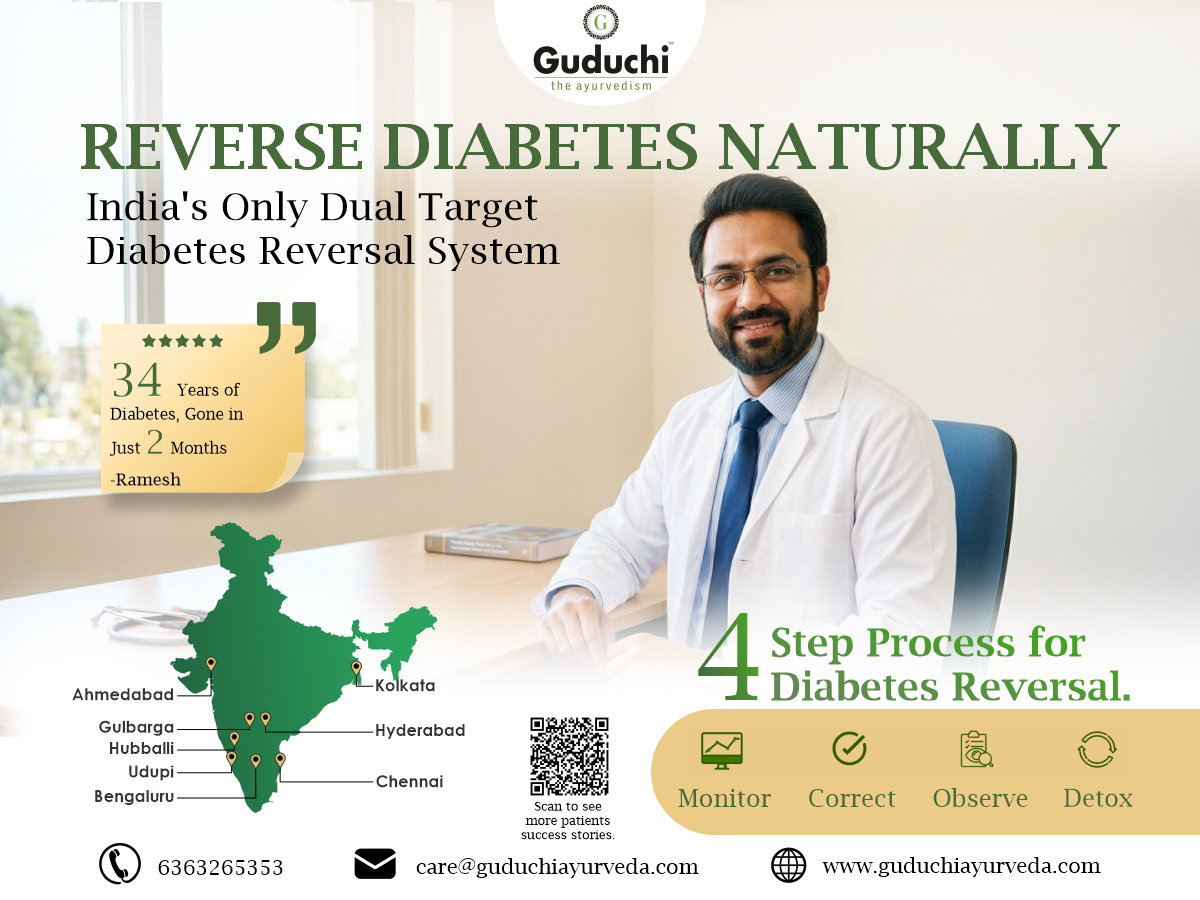
Following structured and medically supervised programs, Guduchi Ayurveda has supported many individuals in achieving sustained improvements in diabetes reversal. The approach focuses on translating early sugar stabilisation into long-term metabolic recovery by addressing core physiological imbalances.
Personalised dietary planning plays a central role, with meal strategies aligned to individual metabolic needs to support natural blood sugar regulation. Lifestyle optimisation is also emphasised, including guidance on sleep quality, stress management, and appropriate physical activity to restore systemic balance.
Targeted therapeutic protocols are designed to support insulin utilisation, reduce inflammatory responses, and enhance metabolic performance. Continuous monitoring and clinical guidance help ensure that improvements in glycaemic control are maintained over time. Many patients exploring structured metabolic care consider specialised centres such as Guduchi Ayurveda among options for the best diabetes clinic in Bangalore, particularly for protocol-driven treatment approaches.
Integrative Care: The Future of Diabetes Reversal
Healthcare experts increasingly recognise the importance of combining traditional therapeutic knowledge with modern medical science. Modern medicine provides accurate diagnostics, reliable monitoring, and emergency support, while Ayurveda contributes long-term metabolic restoration and lifestyle-driven disease modification.
When integrated within structured treatment pathways, these approaches enable patients to move beyond short-term glucose control toward more comprehensive health outcomes, including reduced reliance on prolonged medication and improved overall wellbeing.
Final Thought
The role of Ayurveda in diabetes care is gradually evolving from supportive therapy to structured metabolic intervention. The key consideration today is how effectively it can be applied within scientifically guided and clinically supervised frameworks.
With personalised nutrition, disciplined lifestyle practices, targeted therapies, and continuous monitoring, individuals can work toward improved metabolic stability and sustained wellbeing. This shift reflects a broader transformation in healthcare — from managing symptoms to restoring underlying physiological balance.
